Project: Zhanjiang Mazhang Wastewater Treatment Plant, Guangdong
Product: Smart Phosphorus Removal Dosing Control
Plant Capacity: 50,000 m³/d
Year: 2025

Project: Zhanjiang Mazhang Wastewater Treatment Plant, Guangdong
Product: Smart Phosphorus Removal Dosing Control
Plant Capacity: 50,000 m³/d
Year: 2025
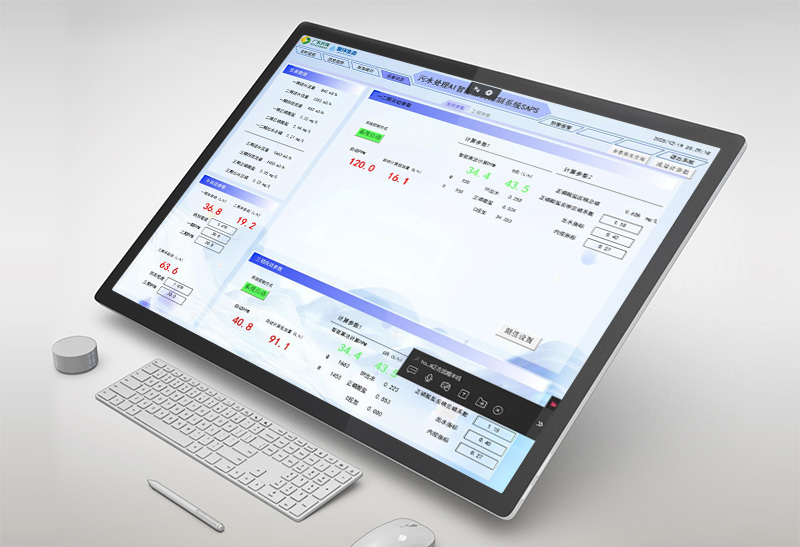
Solve the total phosphorus compliance challenge at a municipal wastewater plant with a high proportion of industrial wastewater.
Zhanjiang Mazhang Wastewater Treatment Plant is located in Mazhang District, Zhanjiang City, with a design treatment capacity of 50,000 tons/day, serving a population of approximately 130,000 and a sewage collection area of about 23 km². It mainly collects domestic sewage and industrial wastewater from Mazhang urban area and the industrial park. About 30% of the influent is industrial wastewater, in which sodium tripolyphosphate added during production by aquatic product processing companies causes abnormally high influent total phosphorus — averaging around 8 mg/L and exceeding 10 mg/L at peak times, far above the design influent quality. To ensure stable effluent total phosphorus compliance, the plant doses large amounts of polymeric ferric sulfate (PFS) as a phosphorus removal chemical at the oxidation ditch outlet and the magnetic coagulation sedimentation tank inlet. Under long-term operation, not only does chemical consumption remain high, but excessive dosing may also affect the biological activity of return sludge, further threatening the stability of the biological system.
Precise Dosing Phosphorus Removal Control System Replaces Manual Extensive Dosing Mode
A two-stage dosing mode of "synchronous phosphorus removal + post-phosphorus removal" was adopted. The magnetic coagulation stage serves as the core assurance unit for chemical phosphorus removal, bearing the main phosphorus removal load; AAO synchronous dosing is used only as an emergency supplement and adjustment measure when influent total phosphorus is high and biological phosphorus removal plus post-phosphorus removal is insufficient. Based on the operating experience of the Mazhang plant, synchronous phosphorus removal dosing is activated when AAO effluent orthophosphate exceeds 2 mg/L. When the oxidation ditch effluent orthophosphate analyzer fails, manual control dosing is used as a supplementary measure. Compared with the pre-retrofit semi-smart mode that relied on manual experience and roughly adjusted dosing pump frequency based on influent flow rate, the new system automatically corrects dosing based on dynamic water quality changes — avoiding excessive dosing while ensuring effluent total phosphorus compliance, and reducing impact on the biological system.
Dual Improvement in Precise Chemical Control and Stable System Operation
After the smart dosing control system was commissioned, the Mazhang plant achieved stable compliant discharge of effluent total phosphorus under conditions of severe influent total phosphorus fluctuations. Phosphorus removal chemical dosing shifted from "experience-based" to "data-driven," making chemical consumption more precise and controllable, and effectively reducing the risk of increased sludge production and biological system shock caused by excessive dosing. This project provides an engineering practice reference for refined phosphorus removal at municipal wastewater plants with a high proportion of industrial wastewater in the Zhanjiang area, and offers a replicable technical path for stable operation of wastewater treatment plants under similar water quality conditions after upgrading and retrofit.
Telephone:+86-13372145285
Address:No. 100, Guangqi Road, Science and Technology City, SND, Suzhou , Jiangsu Province, China
E-mail:jonzo@jonzo.cn

Please fill in the information
We will reply to you within 24 hours.